
The Eagle Academy Foundation · Spring 2026 Reflection
Spring Reflection
How one season of Eagle’s Postsecondary March Madness reminded our young men of exactly who they are, where they come from, and who they can become.
By Donald M. Ruff, Jr. · CEO The Eagle Academy Foundation
When most people hear “March Madness,” they first think of “brackets.” Buzzer beaters. A single shining moment. March Madness, in the traditional sense, is about competition — who advances and who goes home.
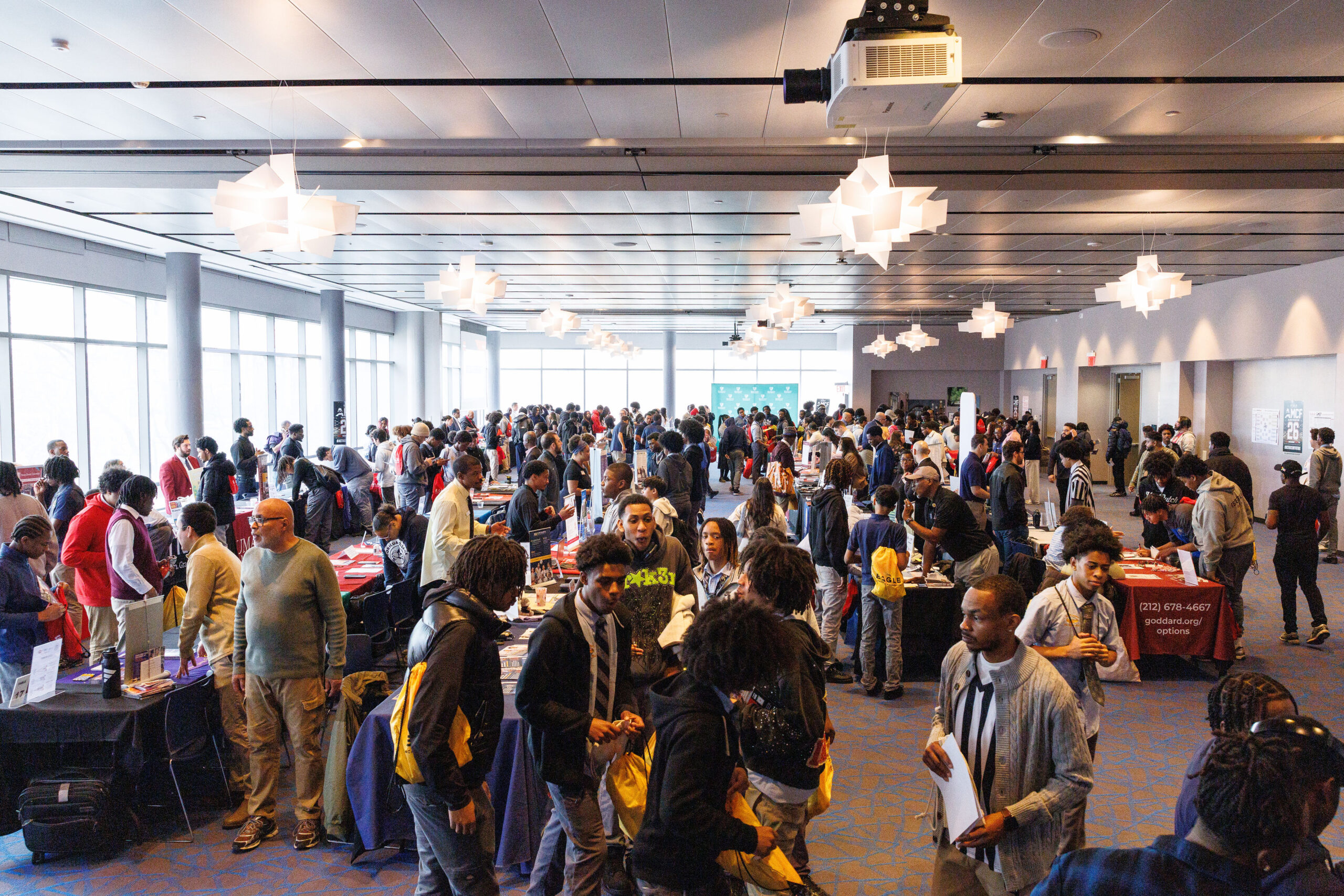
For The Eagle Academy Foundation, March Madness meant something different. It meant five events. Various engagements. Hundreds of young men moving through rooms where their history was honored, their futures were mapped, and their success was treated as inevitable.
Our March Madness was about advancing and activating futures. Our “bracket” was not about elimination — It was about elevation.
I’ve recently been polling the folks who partner with us by asking: When you were in high school, did you believe the career you have today was even possible?
Almost every time, the room goes quiet. No hands raised. Not because people didn’t have ambition, or they weren’t curious, but because no one had ever shown them what was possible. No one had pulled back the curtain on what was actually within reach, or helped them understand that the journey they were on had a destination worth running toward.
That question of what’s possible has driven the work of Eagle for over two decades. This Spring, across many events, with hundreds of young men and educators, we answered it. Loudly. Visually. Historically.
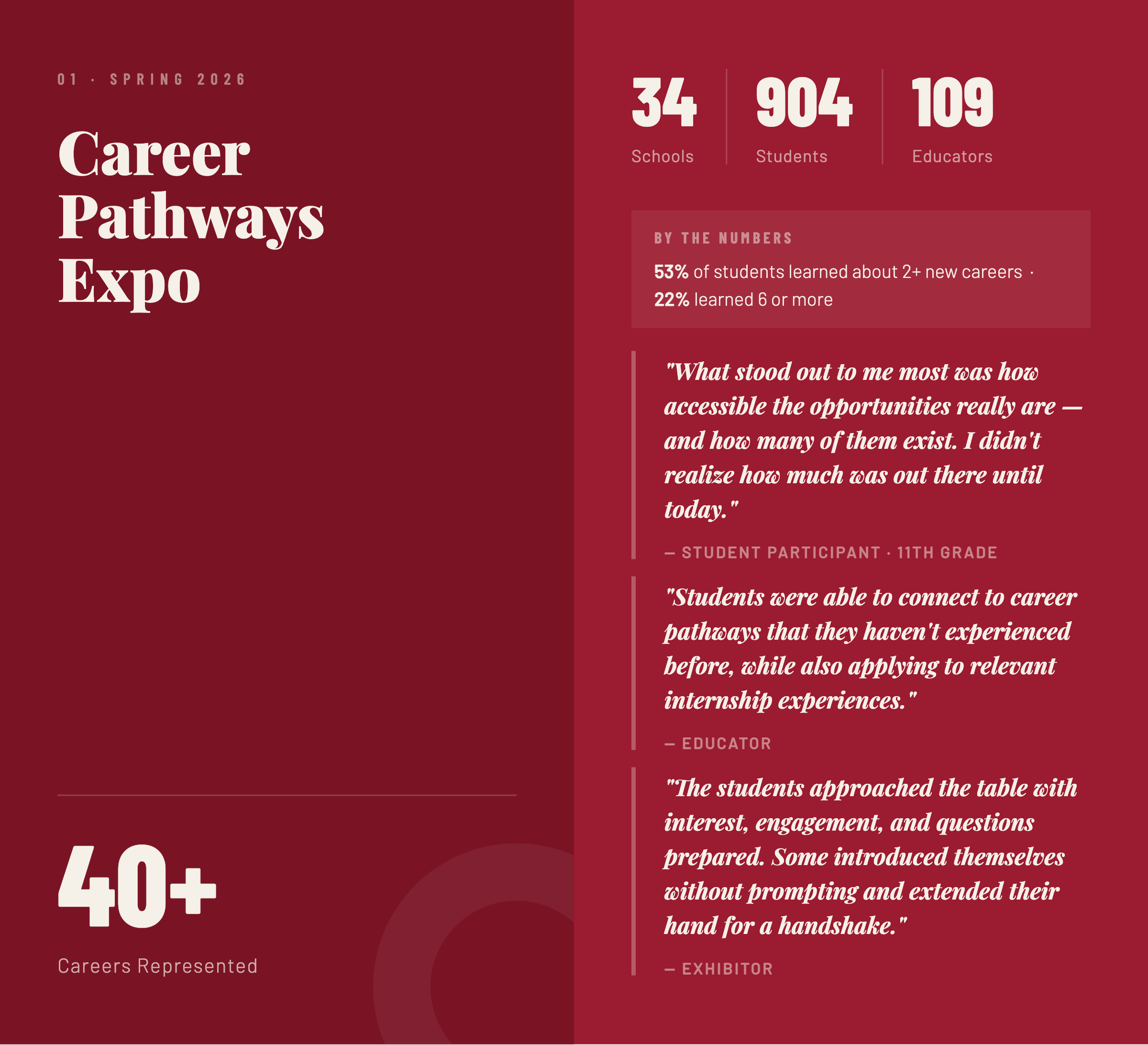
We opened the month with our Career Pathways Expo (CPE), presented in partnership with Manhattan University. This wasn’t a job fair. It was an intentional, curated experience designed to inspire.
More than 40 organizers filled that building. Nearly 1,000 students walked through those doors, having real conversations with professionals from the NYC Department of Citywide Agencies and Services, the FDNY, and the Apollo Theater (to name a few) about what different career paths actually look like from the inside and what opportunities were immediately available to them. Before any of our young men arrived, chaperones received comprehensive training so they could help students optimize every interaction, because we know that access without preparation is just a field trip without purpose or a pamphlet-collection exercise. We made sure that everyone who showed up had a purpose and a goal.
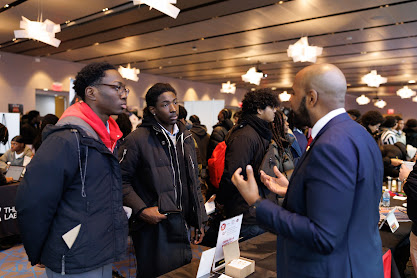
What elevated the room was who else showed up: Eagle Academy alumni. Men who once wore the uniforms of the Eagle Academy came back to pour into the next generation. Notably, Leroy Pope, founder of the clothing brand Renee Renelle, hosted his own table. He went from Eagle student to graduate, to entrepreneur, and there he was, face to face with young men who are still figuring out what’s possible. That full-circle moment is exactly what this event was built for.
Anchoring all of it was the Historic Gallery Walk: the stories of both widely renowned and overlooked professionals, all of whom are extremely accomplished in every field represented in that room – people who looked like our students, who came from places like theirs. It was a room that said, “Not only is this possible; it’s already been done, and what can you do to earn your place on the wall?”
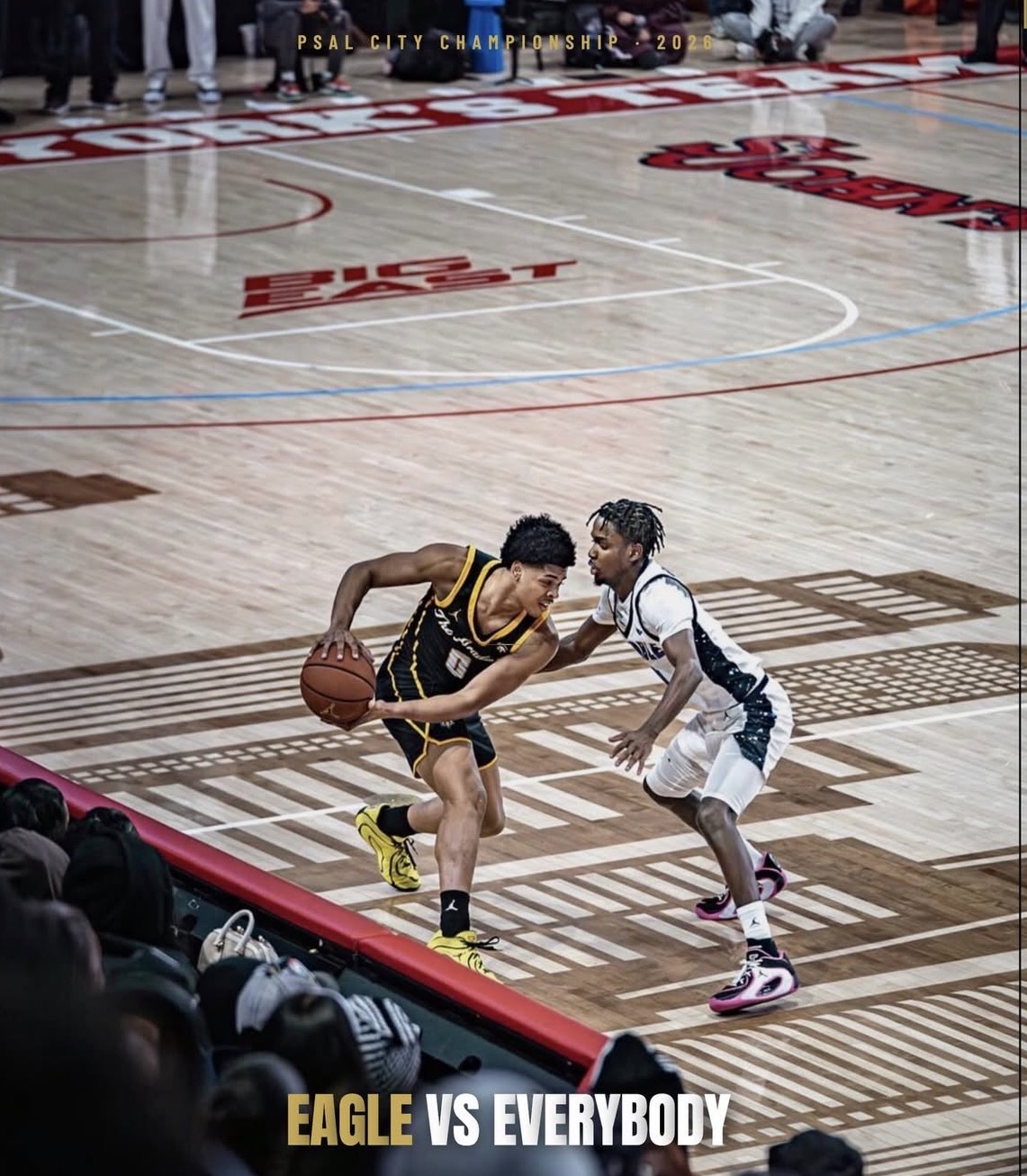
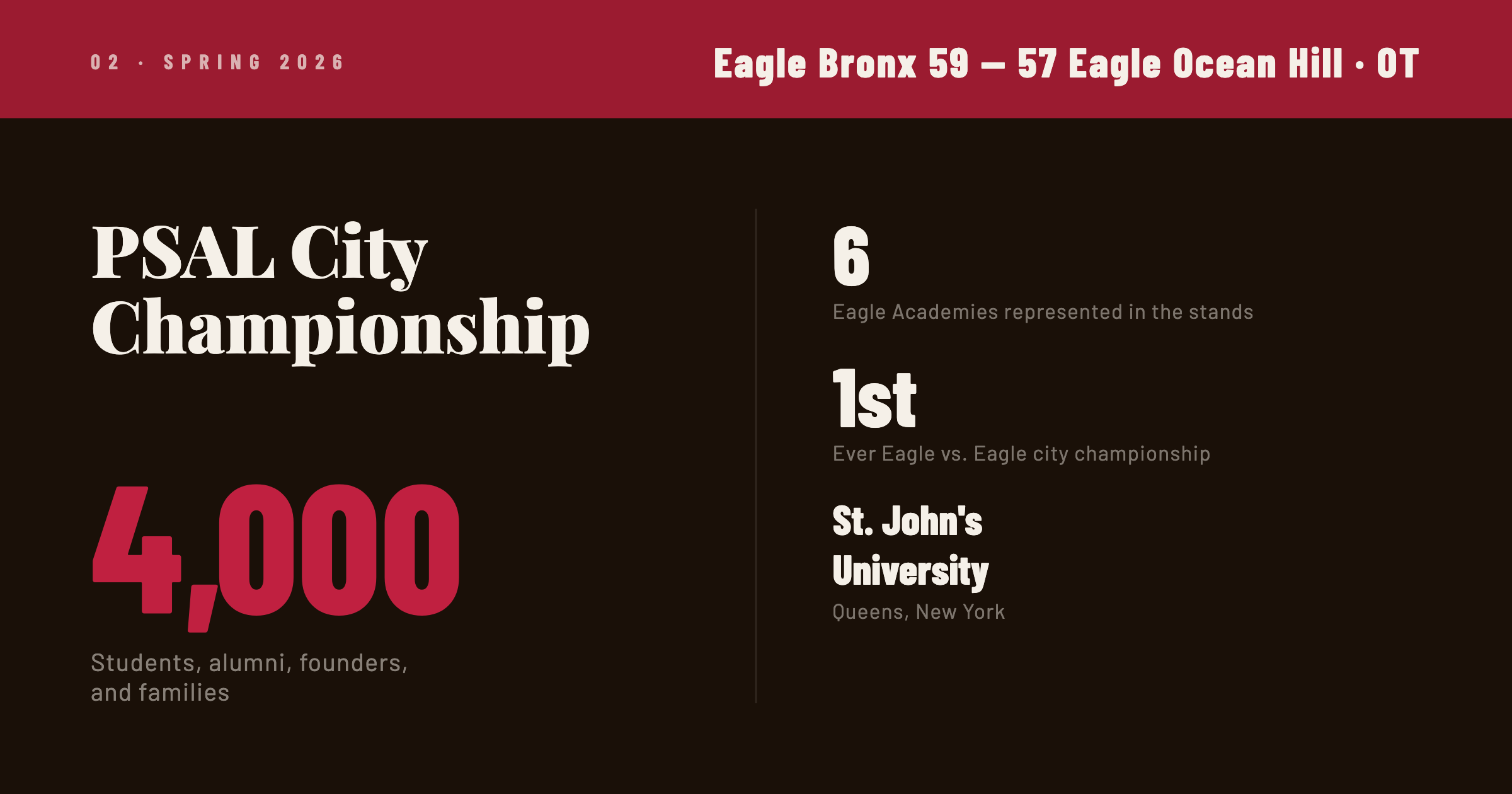
Then came the game—Eagle Bronx versus Eagle Ocean Hill, at St. John’s University. Two schools separated by geography, but bound by the same Eagle Brotherhood, meeting on the biggest stage in New York City Public High School basketball. It went to overtime. Eagle Bronx won 59–57 on two free throws with four seconds left. Both teams put everything C.L.E.A.R. stands for on full display — Confidence, Leadership, Effort, Academic Excellence, Resilience — on one court, in one night.
I need you to understand something about that victory. A year earlier, that same Eagle Bronx team lost the championship by one single point. I was there. I watched that loss settle into them, and I watched what they did with it. They carried it all season. They avenged it in the semifinals against the very team that had beaten them, then finished the job. That’s not just basketball. That’s a life lesson they will carry far longer than any trophy. In every loss life teaches a lesson.
To Coach Rose and Coach Hamilton: your roles have never been just about winning games. You are truly raising boys into men – teaching accountability, discipline, and focus. You are showing them what it looks like to see beyond themselves.
I want to thank Principal Velázquez and Principal Meade, two men who have families and children of their own, who still choose every single day to show up as father figures, big brothers, and mentors to hundreds of young men. In this work, we often spend more time in the schools than we do with our own families. So I want to acknowledge their families too, for the sacrifice, for the grace, for sharing these extraordinary men with us.
"This was more than a game. It was bigger than basketball."
Over 4,000 people filled that building. Eagle Alumni showed up to encourage their brothers – alumni from our first class in 2008 to last year’s graduating class across all six Academies. Also in attendance were educators who have been part of this work for years; founding leaders who planted this seed over two decades ago; along with staff, parents, and families who have poured into this mission from the very beginning. If you weren’t there, it may be hard to understand what that meant fully. But if you’ve ever been inside an Eagle building, if you’ve ever been part of this movement, you know exactly what it felt like.
Juxtaposed with the prevailing narratives that young men are in danger and struggling, lost, and searching for belonging, the Eagle reality is different. What was on display that night was the most powerful rebuttal to that narrative I have ever witnessed. It was the brotherhood of Eagle Academy – alive, loud, and undeniable. For our young men to see that our community showed up for them and showed them love is something no classroom lesson can replicate.
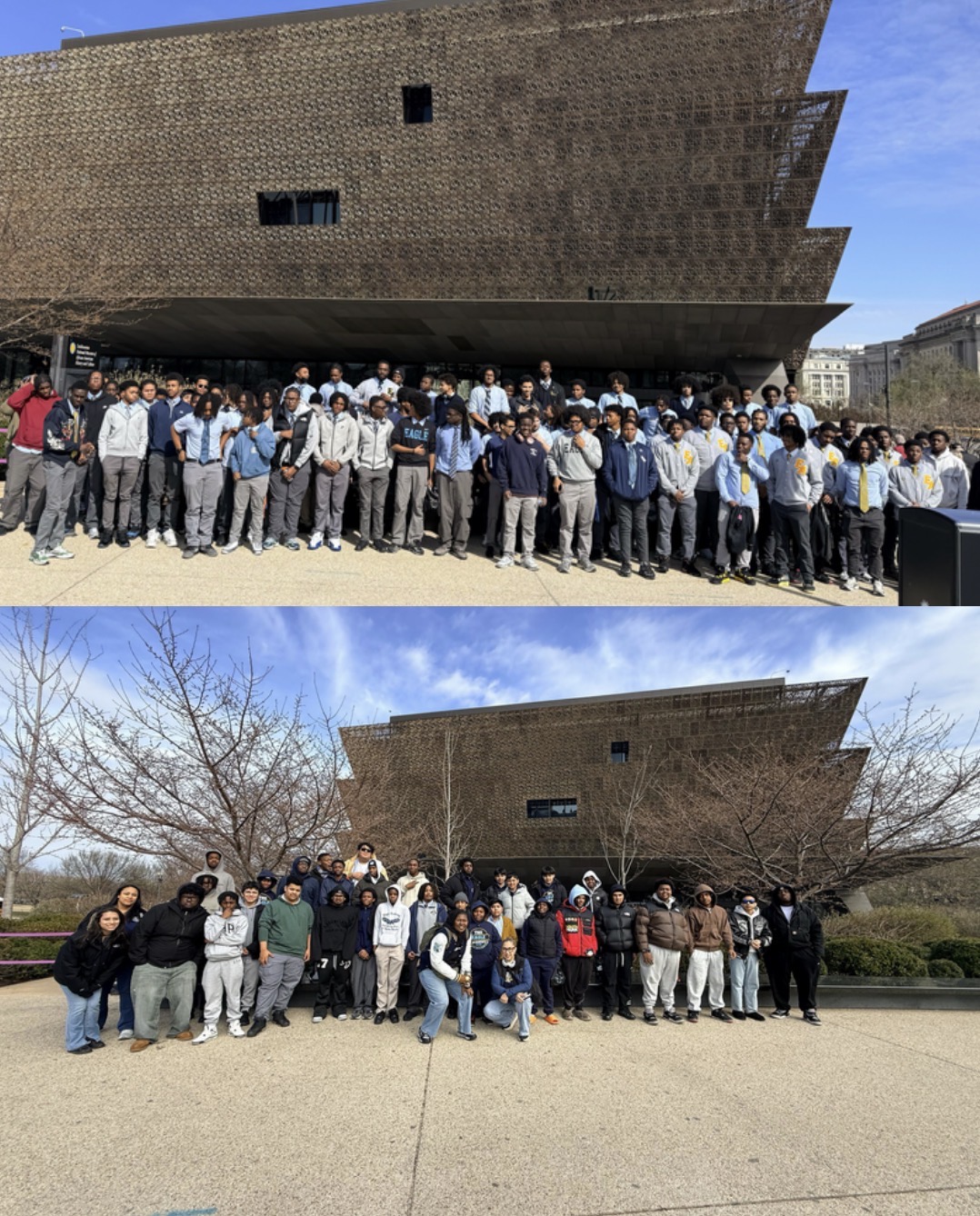
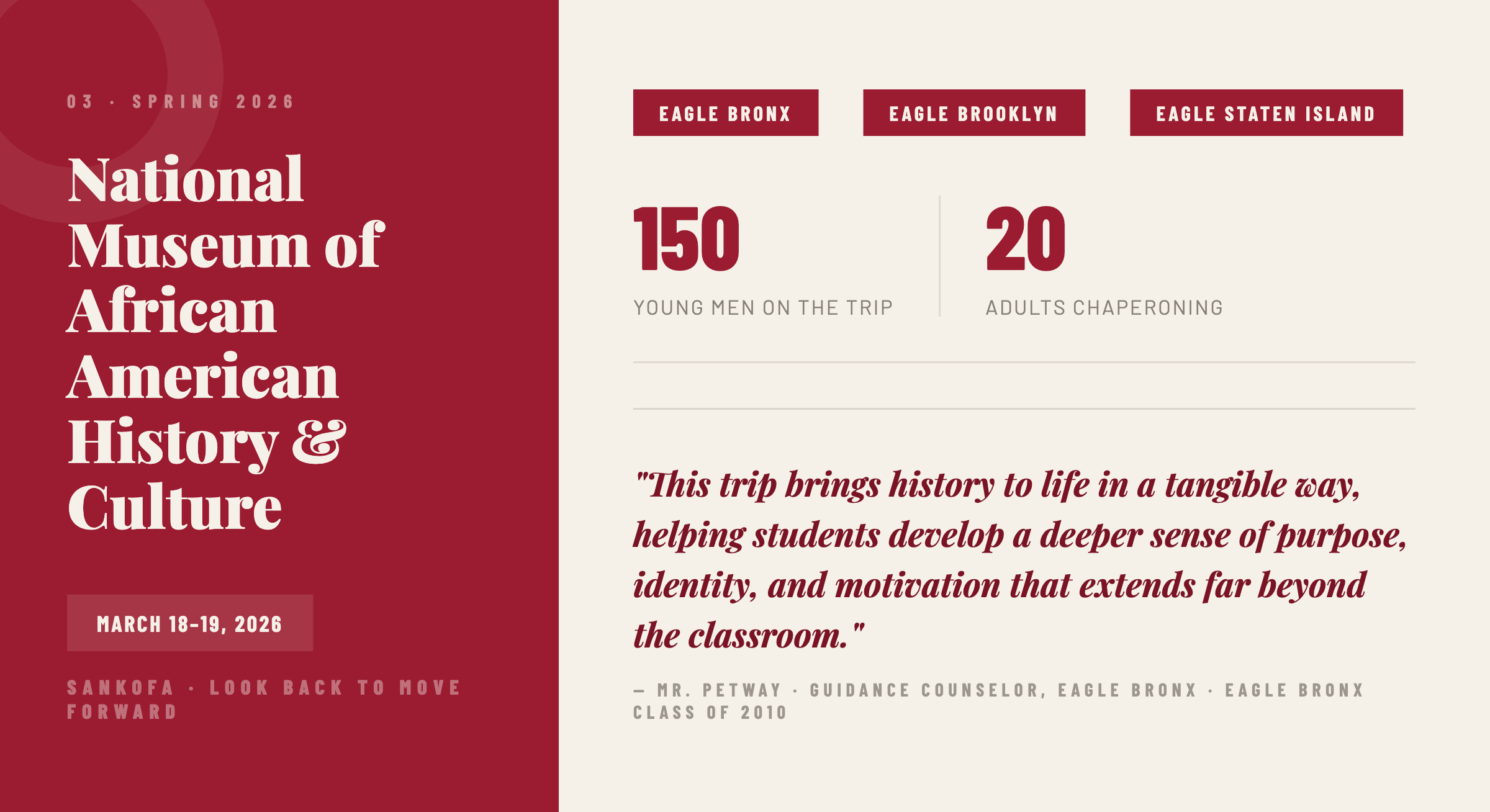
(3-18-26 - 3-19-26)
There is no building in this country that does more to tell the full story of Black America than the National Museum of African American History and Culture on the National Mall in Washington, DC. On March 18 and 19, students from Eagle Bronx, Eagle Brooklyn, and Eagle Staten Island made the journey to our nation’s capital, sponsored by EAF and coordinated in partnership with Determined to Educate, whose commitment to expanding the horizons of young people made these engagements possible.
The timing was not lost on me. We are in a moment when Diversity, Equity, and Inclusion initiatives are under institutional attack, and the very idea of teaching history has become politically contested. We met this moment, taking hundreds of Black and Brown young men to stand inside the most comprehensive collection of African American memory, achievement, and ancestral veneration. Our young men deserve to know the shoulders of greatness they stand on — and understand the responsibility that comes with it.
We closed out the month with our 9th All-Male College Fair — in a time when we are experiencing a national crisis for male students.
Something is happening to our young men — and the data is no longer quiet about it. Across the country, Black male enrollment in higher education has fallen 25% since 2010. Meanwhile, the nation is approaching what experts call an “enrollment cliff” — a demographic decline driven by declining birth rates that will further thin the pipeline in the years ahead. At HBCUs, the crisis cuts even deeper: Black men now account for only 26% of students — down from 38% in 1976. There are fewer Black men enrolled at HBCUs today than there were fifty years ago.
That reality demands a response — and we continue to deliver one.
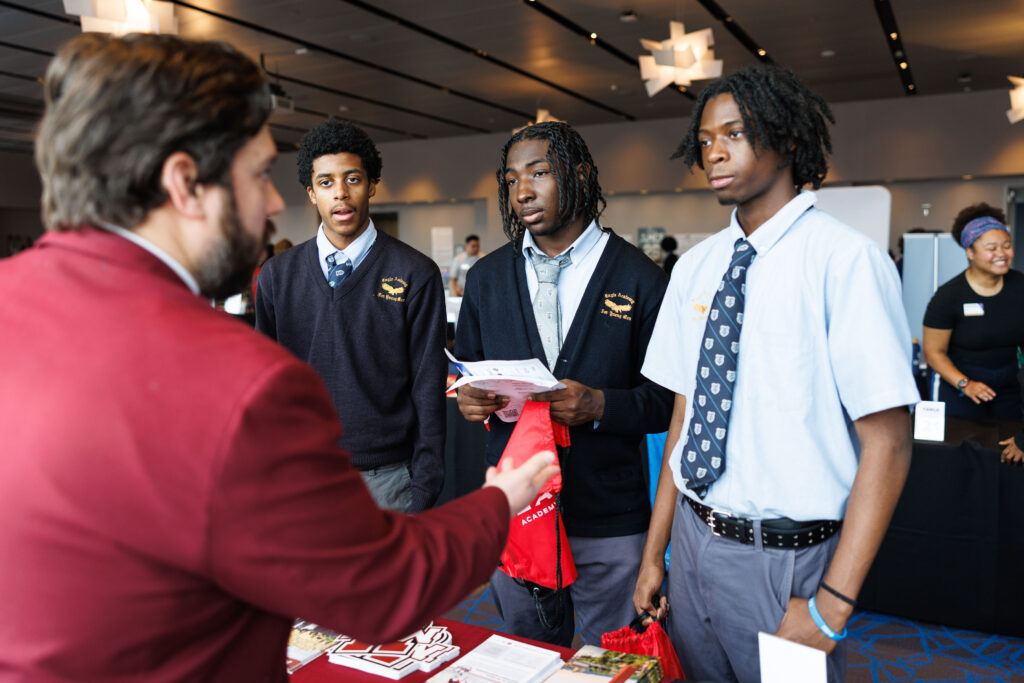
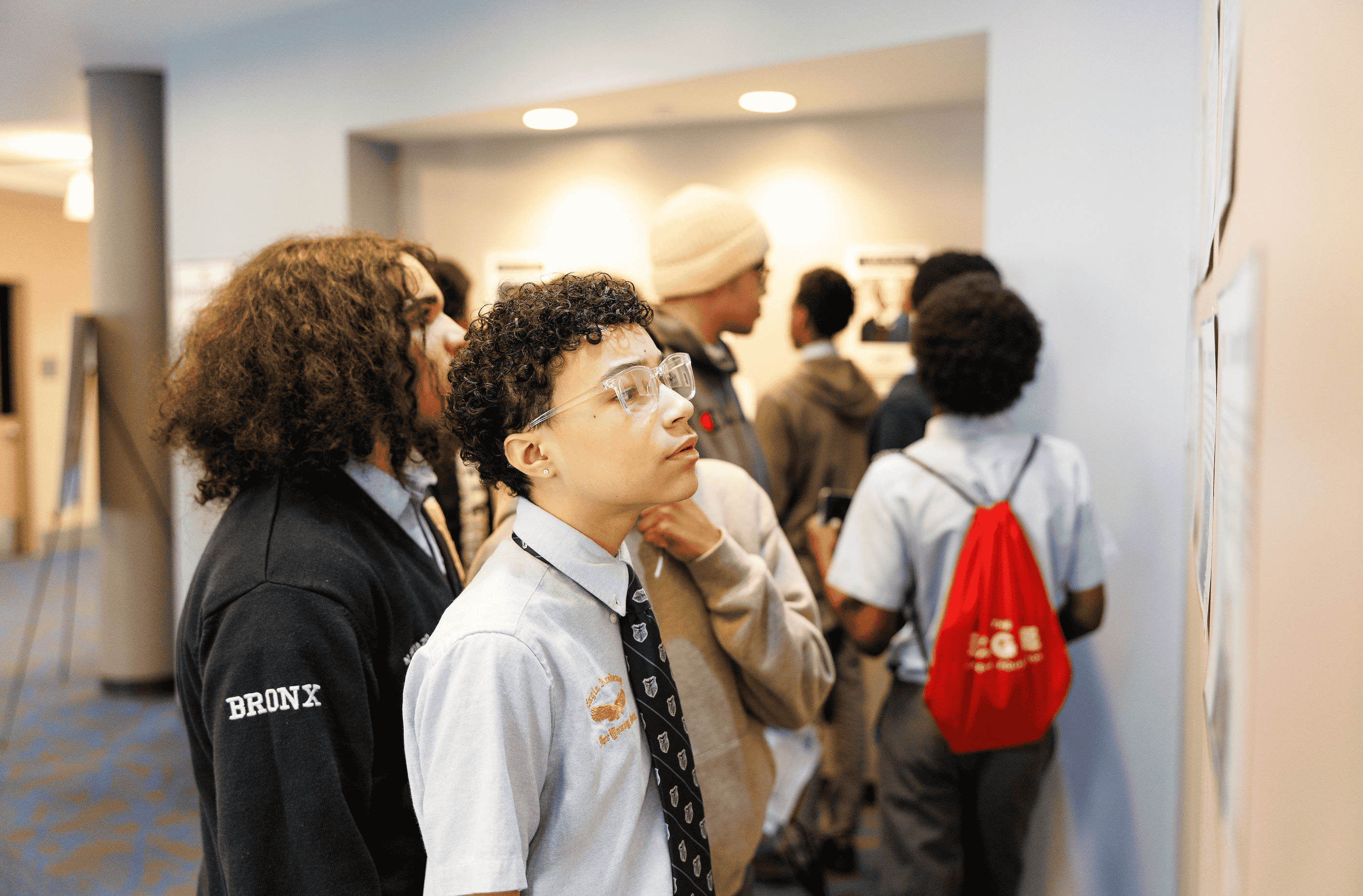
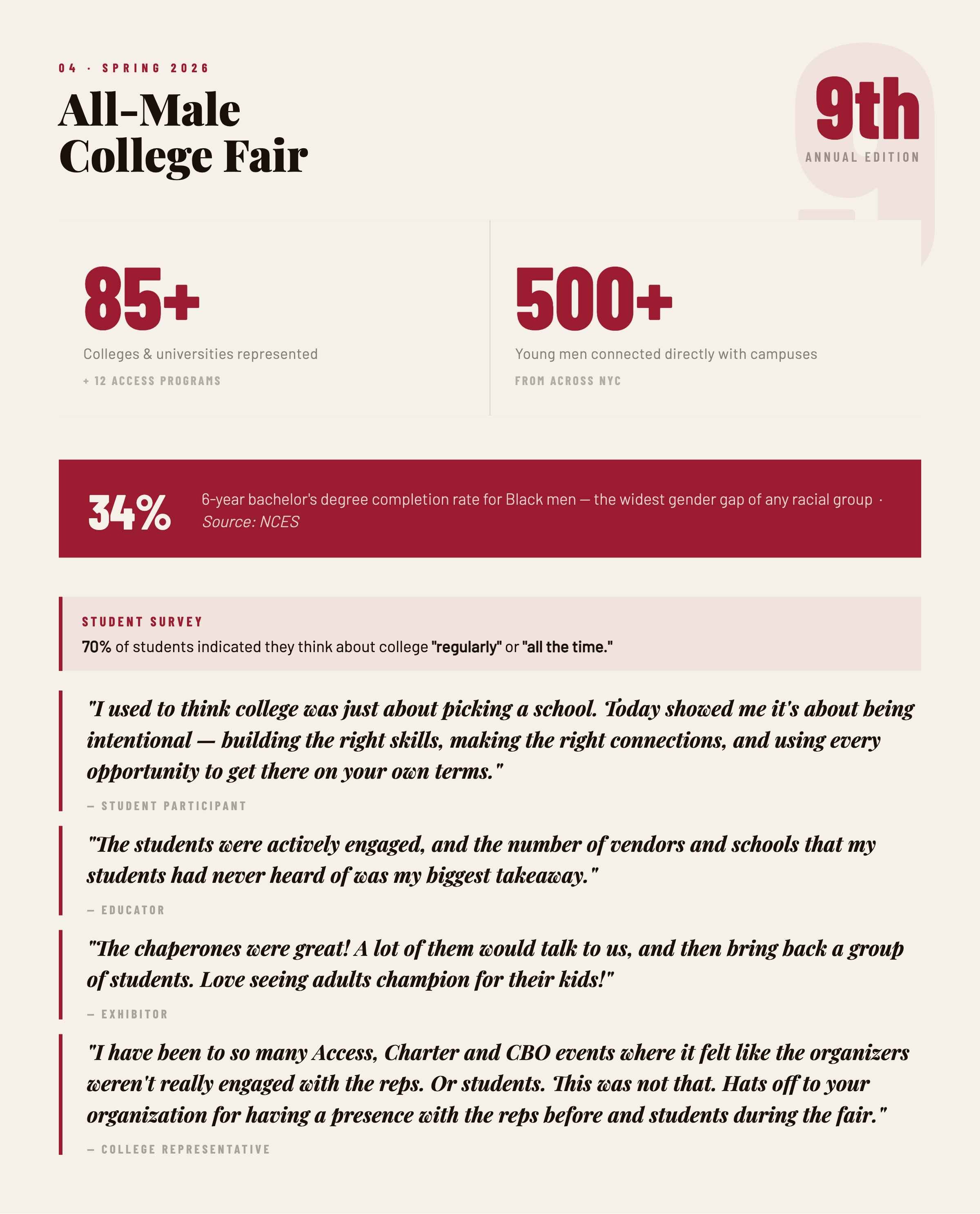
The All-Male College Fair (AMCF) brought together more than 85 colleges and universities — and 12 access programs and support organizations — connecting directly with over 500 young men from across New York City. Students could connect with college representatives, explore schools and their offerings, ask honest questions, and, maybe for the first time, start seeing themselves as people who belong on college campuses.
Representation at the door is only half the story. Among students enrolled in four-year public institutions, only 45.9% of Black students complete their degrees in six years — the lowest rate of any racial group. For Black men specifically, the completion rate drops to 40%. Getting in the room matters. But so does making it to graduation day.
Organizations like The Posse Foundation and Bottom Line were also there, because getting into college is only part of the story. Staying. Succeeding. Thriving. That’s the full mission.
Like the Career Pathways Expo, we told the story behind the story with a Historic Gallery Walk featuring prominent men of color who graduated from the very institutions represented in the room. We shared the history of Black people in higher education: the first schools to open their doors when others continued to slam theirs shut. We honored the HBCU legacy and so much more. From exclusion to excellence, from resistance to renaissance, here we are. Thriving. Achieving. In spite of intentionally placed obstacles and because of every ancestor who refused to yield.
One of those institutions holds special meaning for me personally. Oberlin College is my alma mater. It also sits on land that was once a stop on the Underground Railroad — one of the reasons I chose it. History matters. It always has.
As our young men learned this rich history, it served as a mirror of what was possible for them — I could see them lean in, eager to learn more.
Spring Break 2026 offered a glimpse of what becomes possible when the right partners refuse to think small.
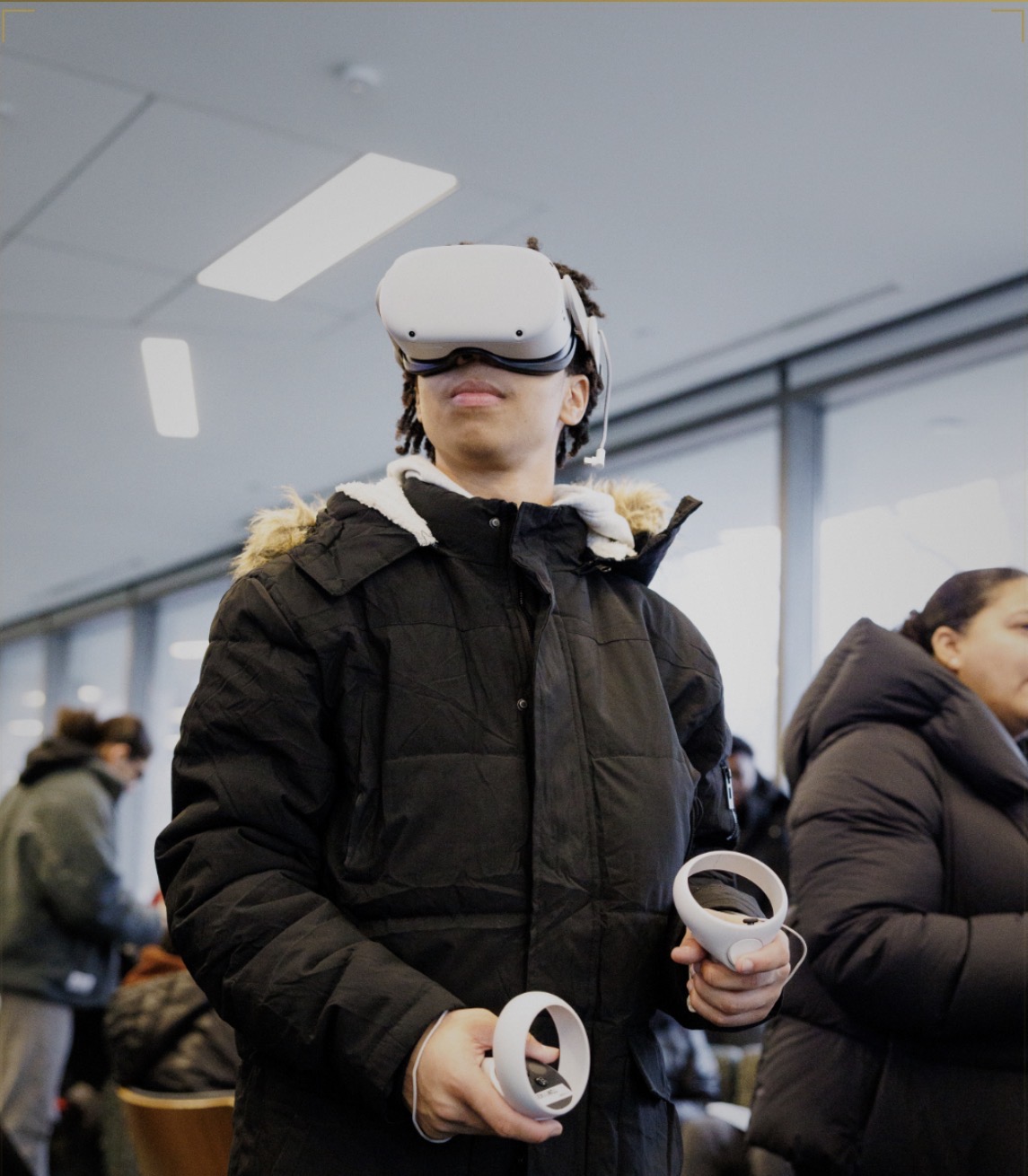
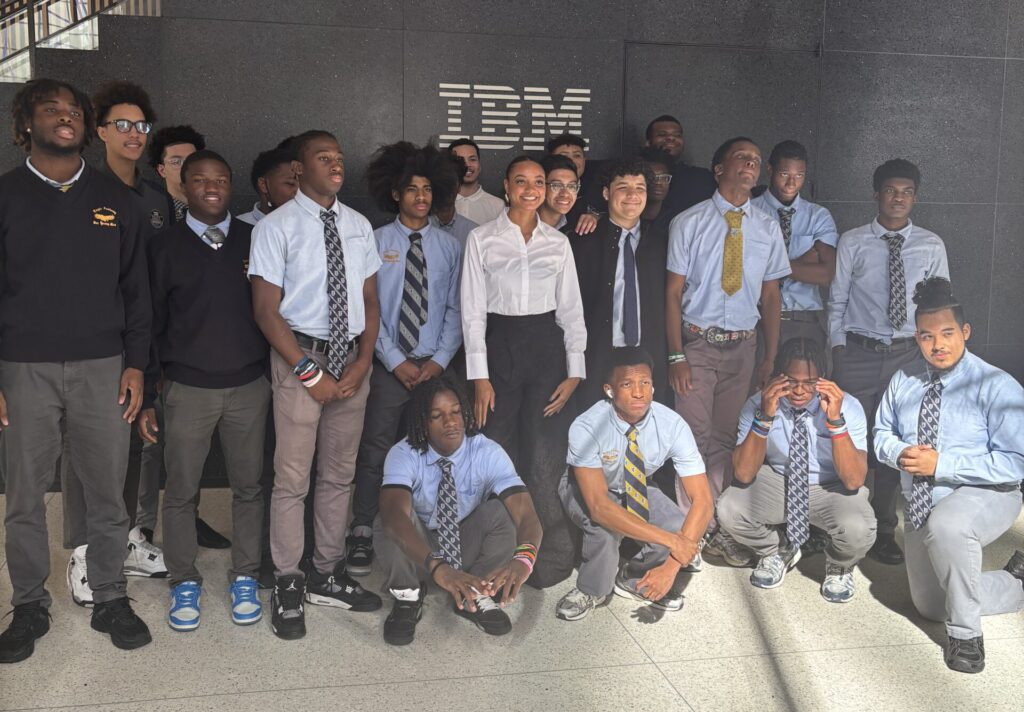
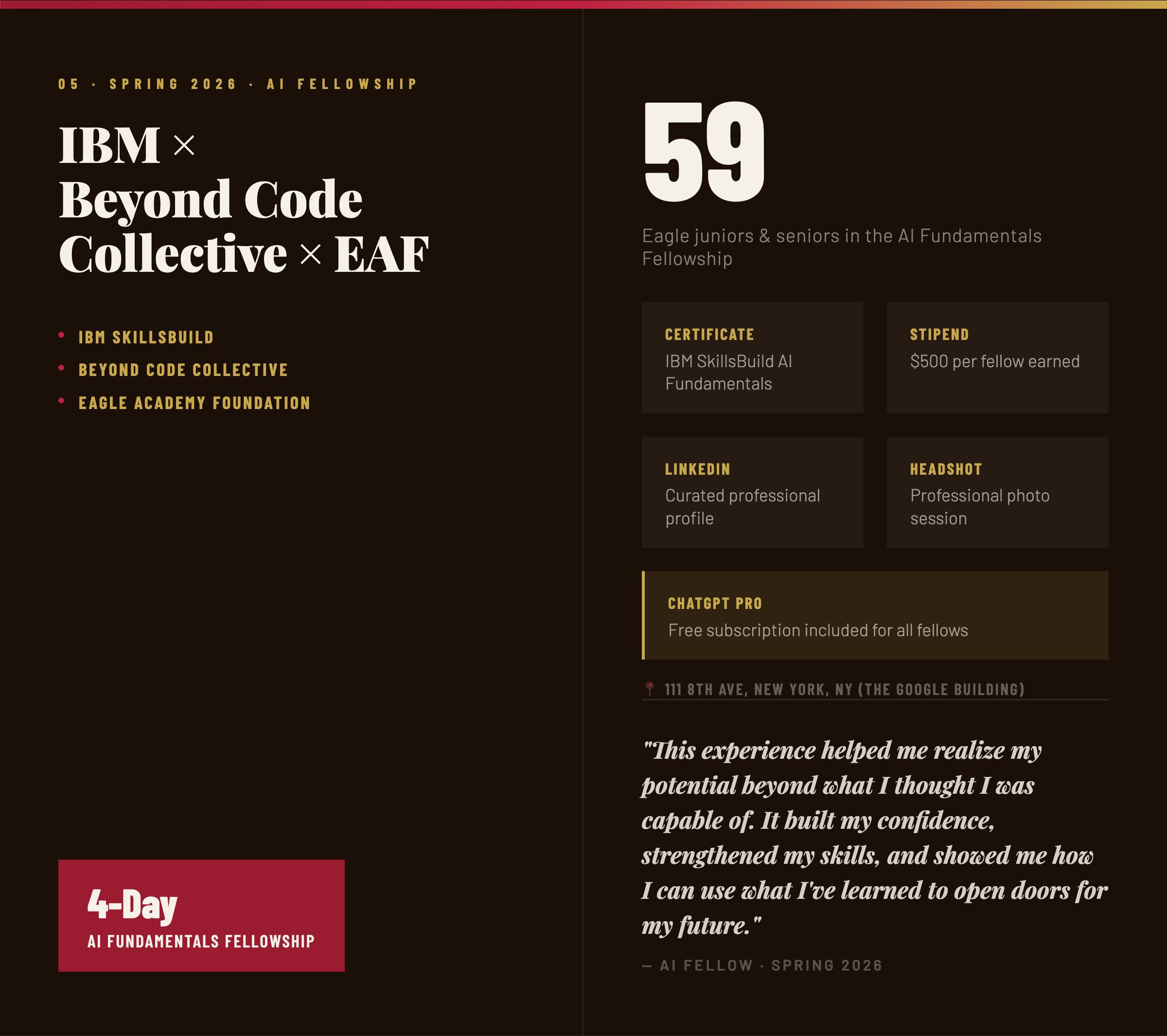
Through a three-way collaboration between IBM, Beyond Code Collective, and Eagle Academy Foundation, 59 Eagle juniors and seniors spent four days inside one of the most consequential conversations of our time — the rise of artificial intelligence. The AI Fundamentals Fellowship, powered by IBM SkillsBuild, was not a passive introduction. Fellows moved through the history and development of AI, explored the mechanics of machine learning and deep learning, built real-world AI projects, and wrestled with the ethical questions that this technology demands we ask. They also learned how to position this knowledge — how to carry it into college applications, career planning, and the professional identities they are already building.
When the four days concluded, every fellow left with clear, practical outcomes: a certificate verifying their completion of the fellowship, a $500 stipend for their commitment, a curated LinkedIn profile to showcase their new skills, a ChatGPT Pro subscription for continued learning, and a professional headshot. These were not just mementos. Each served as a concrete tool to support their educational and career advancement.
Over the last month, I have been in deep reflection. The month of March and this spring were more than a collection of days and events. It was a statement. Not made with words, though we have plenty of those, but made with purpose. With hundreds of miles traveled, museum halls walked, basketball gymnasiums filled, exhibit halls packed – futures were mapped and activated.
Sankofa asks us to look back. We looked back into the archives of the National Museum of African American History and Culture, into the gallery walls of our Career Pathways Expo and All-Male College Fair, into the classrooms and courts that shaped these young men, and what we found was not just history. It was instruction. It was permission. It was proof.
We took young men who live in a world that routinely underestimates them, and we surrounded them with evidence of what is possible. We gave them history as a foundation and possibility as a north star. We showed them the map and handed them the tools to chart their own journey.
That’s the work. That’s always been the work. I am grateful to every person who made these events possible. As you can see, the success of our young men depends on so many elements coming together as a foundation and support beams along their journey. Those elements include partnership, offers of workplace experiences, internship and entry-level employment opportunities, introductions, and financial resources.
If any of these resonate with you — if you see yourself making a difference in the lives of the young men that we serve, please consider giving of your time, talent, and treasure through The Eagle Academy Foundation. Invest in the future we are building together. Thank you for your partnership.
With gratitude to:
The Eagle Network — Principals, educators, families, alumni, coaches, staff, and leadership across every building who filled buses and showed up.
Eagles Soaring Beyond Funders: — ABNY, Altman Foundation, Bloomberg Philanthropies, Fordham Street Foundation, Ira W. DeCamp Foundation, Keith Haring Foundation, M&T Bank, Macy's, New York Life, News Corp, NYC Department of Youth & Community Development, NYC Public Schools, RBC Foundation USA, Robin Hood Foundation, Shippy Foundation, The Frances L. & Edwin L. Cummings Memorial Fund, Tiger Foundation, Turner Construction, Webster Bank.
Determined to Educate — for making the NMAAHC trip a reality.
NYC Public Schools — for partnering with us in bringing over 1400 students for college and career exposure activities.
Manhattan University — for elevating EAF's March Madness.
Every exhibitor, college, and organization — who showed up and poured into our young men.
Danny Harris — for his leadership at PSAL and for shepherding an incredible, historic championship.
To the young men of Eagle Academy — for reminding us, every single day, exactly why this matters.
EAF Staff — for making every one of these moments possible behind the scenes.
EAF Board of Directors — for your vision, your trust, and your unwavering belief that young men of color deserve access to every door this world has to offer.
EAF Donors — for understanding that a check is never just a check. It's an investment in the future. A campus visit. A young man seeing himself in a gallery of greatness for the first time. Thank you for investing in what that moment becomes.
Alumni Signature Event Crew — for showing up and holding it down at every event, making each moment run seamlessly from the inside out.
New Visions for Public Schools and ACT WorkKeys — for facilitating incredible workshops for our students.
Manhattan University Student Tour Guides — for giving 100+ students a tour of their beautiful campus
.
Beyond Code Collective, Black Girls Code and IBM — for being great IBM Fellowship partners.
Citations:
STAT 1: “Black male enrollment in higher education has fallen 25% since 2010.”
Source: American Institute for Boys and Men (AIBM), 2024
STAT 2: “Black men now account for only 26% of students at HBCUs — down from 38% in 1976.”
Source: American Institute for Boys and Men / NPR, October 2024
STAT 3: “Fewer Black men enrolled at HBCUs today than fifty years ago.”
Source: American Institute for Boys and Men (AIBM)
STAT 4: “For Black men specifically, the completion rate drops to 40%.”
Source: National Student Clearinghouse Research Center, Completing College